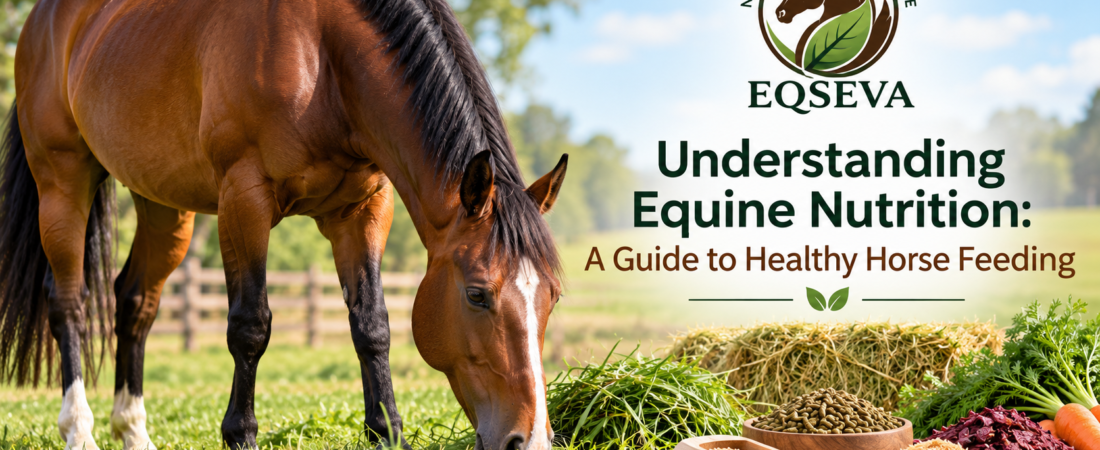
Horse nutrition is the foundation of good health, physical performance, reproductive efficiency and long-term wellbeing.
A balanced feeding programme should provide adequate energy, protein, fibre, vitamins, minerals and clean drinking water according to the horse’s age, body weight, workload and physiological condition.
Unfortunately, many feeding practices rely on traditional assumptions or excessive supplementation without evaluating the horse’s actual nutritional requirements.
At EQSEVA, we believe that understanding equine nutrition is the first step towards responsible horse care.
Through this article, we will explore the principles of balanced feeding, the importance of forage, mineral balance, digestive health and common nutritional mistakes.
1. Understanding the Natural Feeding Behaviour of Horses
Horses are naturally grazing animals, evolved to consume small quantities of forage throughout the day. Their digestive system is designed for frequent intake of fibre-rich feed rather than large meals given at long intervals.
In natural conditions, horses may spend approximately 12–18 hours daily grazing and foraging. Providing adequate roughage, maintaining regular feeding schedules and allowing access to clean drinking water are fundamental principles of healthy horse management.
2. The Importance of Forage in Equine Nutrition
Forage forms the foundation of a healthy equine diet. Horses depend on fibre-rich feeds such as pasture grass, hay and other suitable roughage to maintain normal digestive function and support the beneficial microorganisms present in the hindgut.
As a general guideline, horses should receive at least 1.5% of their body weight daily in forage dry matter, with approximately 2% being a common target for many adult horses. For example, a 500 kg horse would typically require around 10 kg of forage dry matter per day, although individual requirements vary according to workload, body condition and forage quality.
Adequate forage supports healthy intestinal movement, encourages natural chewing behaviour and helps maintain saliva production, which contributes to buffering stomach acid. Insufficient forage or prolonged periods without feed may increase the risk of digestive disturbances and undesirable behaviours.
The nutritional value of forage varies considerably depending on plant species, maturity, harvesting methods and storage conditions. Therefore, horse owners should assess forage quality and, where practical, obtain laboratory analysis before deciding how much concentrate or mineral supplementation is necessary.
3. Understanding Energy and Protein Requirements in Horses
Energy and protein are essential components of a balanced equine diet. However, their requirements vary depending on the horse’s body weight, age, workload, growth, reproductive status and overall health.
Energy Requirements
Horses obtain energy from digestible fibre, carbohydrates and fats. Energy is required for maintaining normal body functions, regulating body temperature, supporting movement and performing physical work.
A horse at maintenance generally requires less dietary energy than a horse undergoing intensive training, pregnancy or lactation. Excessive energy intake may lead to unwanted weight gain, while insufficient energy intake can result in weight loss and reduced performance.
Protein Requirements
Protein supplies amino acids needed for muscle development, tissue repair, hoof growth, enzyme production and other essential physiological functions.
Protein quality is as important as protein quantity. Essential amino acids, particularly lysine, must be supplied through the diet because horses cannot synthesise them in sufficient quantities.
Common protein sources in equine feeding include suitable forage, soybean meal and other properly processed feed ingredients.
Providing excessive protein does not automatically improve muscle development or performance. Surplus dietary protein is metabolised, and its nitrogen is excreted, increasing water requirements and urine output.
Therefore, both energy and protein should be balanced according to the individual horse’s nutritional requirements rather than supplemented indiscriminately.
4. Essential Minerals and Calcium–Phosphorus Balance in Horses
Minerals play essential roles in maintaining healthy bones, muscles, nerves, hooves and metabolic functions in horses. Important minerals include calcium, phosphorus, magnesium, sodium, potassium, zinc, copper, manganese and selenium.
Calcium and Phosphorus Balance
Calcium and phosphorus are particularly important for skeletal development and maintenance. However, providing these minerals in excessive quantities or inappropriate proportions can create nutritional imbalances.
For most adult horses, the dietary calcium-to-phosphorus ratio should generally be maintained between approximately 1.2:1 and 2:1. The total quantities supplied are equally important. A suitable ratio alone does not guarantee that the horse’s mineral requirements are met.
Excessive phosphorus intake may interfere with calcium metabolism and contribute to nutritional secondary hyperparathyroidism, a condition associated with weakened bones.
Conversely, excessive calcium supplementation may disturb the balance of other minerals and should not be undertaken without evaluating the existing diet.
Understanding Mineral Supplementation
Many horse owners routinely add dicalcium phosphate, tricalcium phosphate or other mineral supplements without first assessing the mineral content of their forage and concentrate feeds.
Such supplementation is not necessarily beneficial and may create imbalances if the existing ration already supplies sufficient minerals.
A more scientific approach involves analysing forage, reviewing concentrate ingredients and calculating the total daily mineral intake before selecting supplements.
Trace Minerals
Zinc and copper contribute to normal hoof development, skin health and connective tissue formation. Selenium supports antioxidant functions but has a relatively narrow margin between adequate and excessive intake.
Therefore, mineral supplementation should be based on nutritional requirements, dietary analysis and appropriate professional guidance rather than assumptions.
5. Digestive Health and the Role of the Hindgut
The digestive system of a horse is specially adapted to process fibre-rich forage. Unlike ruminants, horses are hindgut fermenters, meaning that a substantial portion of fibre digestion takes place in the caecum and large colon through the activity of beneficial microorganisms.
These microorganisms break down fermentable fibre and produce volatile fatty acids, which provide an important source of energy for the horse.
Maintaining a healthy hindgut environment requires adequate forage, consistent feeding practices, clean drinking water and careful management of dietary changes.
Sudden increases in grain or starch-rich concentrates may disturb the microbial balance of the hindgut, potentially contributing to digestive problems such as colic, diarrhoea and laminitis.
Any changes to a horse’s feeding programme should therefore be introduced gradually. Feeding decisions should consider the horse’s age, workload, body condition and overall health.
At EQSEVA, we encourage horse owners to prioritise balanced nutrition, good-quality forage and responsible digestive health management rather than relying on unnecessary supplementation.
6. Common Feeding Mistakes in Horses
Even well-intentioned horse owners sometimes make feeding mistakes that can affect their horses’ health, performance and long-term wellbeing.
1. Excessive Concentrate Feeding
Feeding large quantities of grains or concentrates without sufficient forage can increase the risk of digestive disturbances. Concentrates should be selected according to the horse’s energy requirements and divided into appropriate meals.
2. Unnecessary Mineral Supplementation
Adding calcium, phosphorus, selenium or other minerals without evaluating the existing diet may create nutritional imbalances. Excessive supplementation can interfere with the absorption or utilisation of other essential nutrients.
3. Sudden Changes in Feed
Abrupt dietary changes can disturb the microbial population in the hindgut. New feeds should generally be introduced gradually over approximately 7–14 days, with additional care for sensitive horses.
4. Ignoring Forage Quality
Poor-quality, mouldy or contaminated forage may compromise digestive and respiratory health. Horse owners should inspect forage regularly and consider laboratory analysis when possible.
5. Feeding Without Considering Workload
A horse performing demanding exercise requires a different feeding programme from a horse at maintenance. Diets should be adjusted according to body condition, workload, age and physiological status.
6. Excessive Reliance on Supplements
Supplements cannot replace a balanced feeding programme. Before introducing additional products, owners should evaluate whether the horse has a genuine nutritional deficiency or a specific requirement.
Responsible feeding begins with understanding the horse’s nutritional needs and evaluating the complete diet rather than relying on assumptions.
7. Conclusion: A Balanced Approach to Equine Nutrition
Proper equine nutrition is not simply about providing more feed or additional supplements. It is about achieving the correct balance of energy, protein, fibre, vitamins and minerals according to each horse’s individual requirements.
Good-quality forage, adequate clean drinking water, appropriate concentrate feeding and carefully evaluated mineral supplementation form the foundation of a healthy feeding programme.
Horse owners should regularly monitor body condition, hoof quality, coat condition, digestive health and overall performance. Where possible, forage testing and professional nutritional assessment can help identify deficiencies or excesses before supplementation decisions are made.
At EQSEVA, our philosophy is based on responsible horse care, informed nutrition and a thoughtful approach to natural equine wellbeing.
EQSEVA — Natural • Pure • Equine
Educational information only. Feeding programmes should be adapted to individual horses with guidance from a qualified equine nutritionist or veterinarian.